
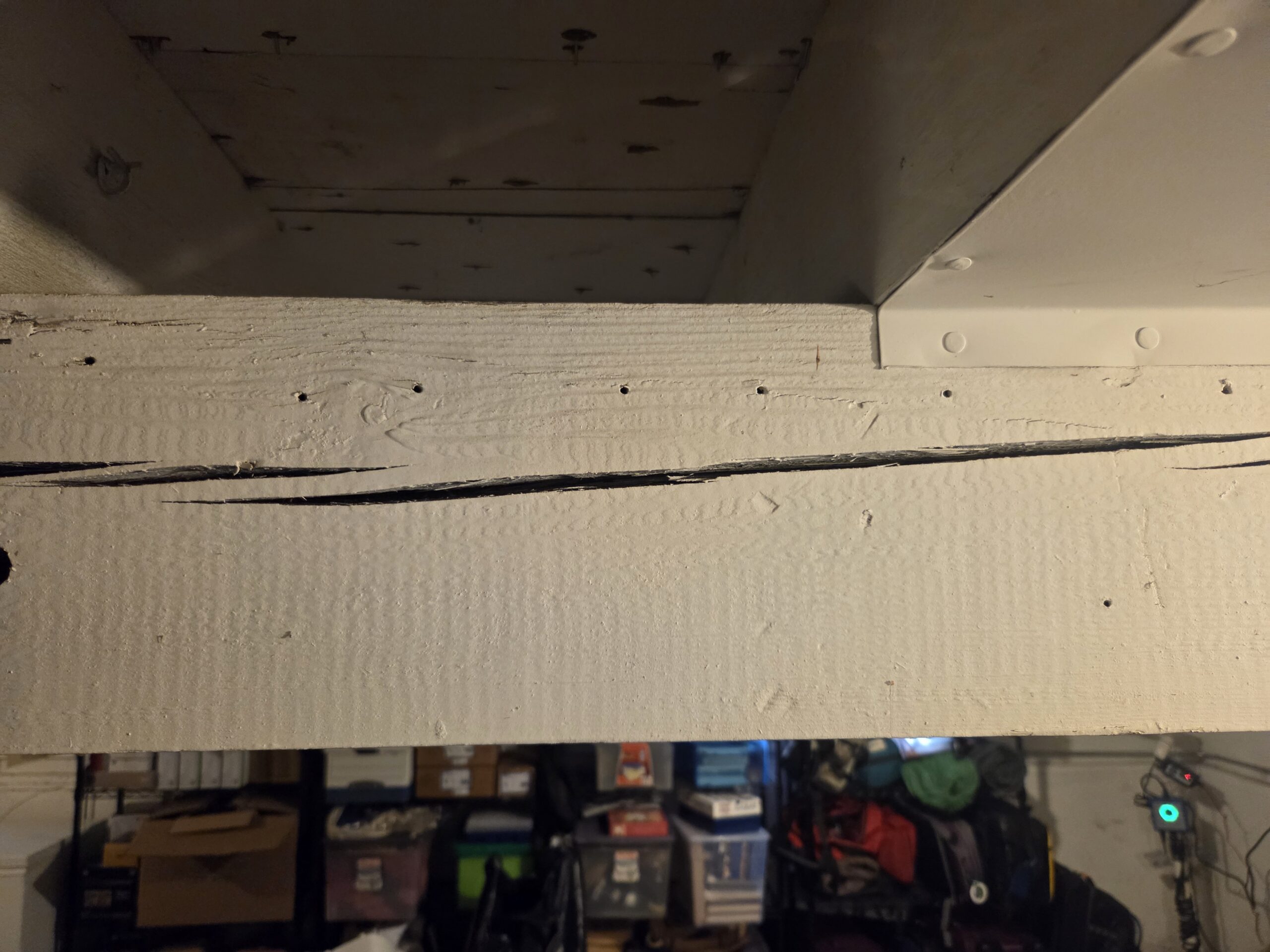
Cracks in Wood Beams: When Should You Be Worried?
It’s one of the most common questions homeowners ask when they spot a crack running along a wood beam in their basement or crawl space: Is my house falling apart?
The good news is that many cracks in solid wood beams are a normal result of drying, known as wood checking. A lengthwise crack does not automatically mean a beam is failing or needs to be replaced.
But not every crack is harmless. Deep splitting, sagging, moisture damage, or problems where a beam meets its supports can point to a more serious issue. Here’s how to tell when a crack may simply be part of the wood’s natural aging process and when it’s worth a closer look.
Concerned About a Cracked Support Beam?
If you notice sagging, damaged supports, or other structural changes, book a structural assessment with American Beam & Steel.
Why Do Wood Beams Crack?
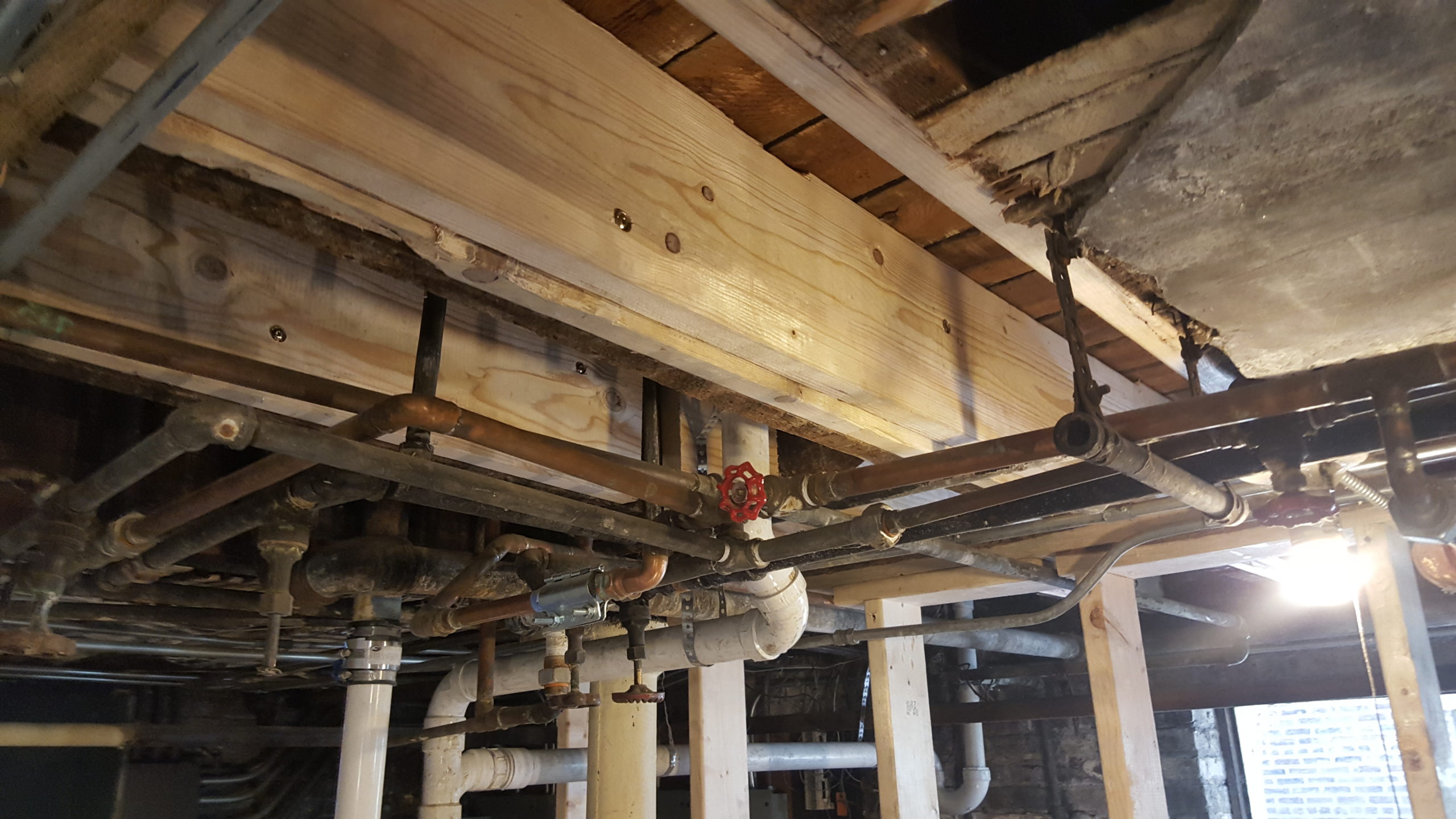
Wood is a natural material, and it continues to respond to moisture after it has been installed. As timber dries, it can shrink unevenly. That movement can leave visible cracks, even when the beam is otherwise performing as intended.
What Is Wood Beam Checking?
Checking happens when the outer portions of a wood beam lose moisture and shrink at a different rate than the interior. The resulting internal stresses can cause the wood to separate along its grain, creating a surface crack or a longer opening.
Checking is especially common in substantial solid-sawn timbers. It can develop as wood seasons and remain visible for years without necessarily indicating structural failure.
Why Do Cracks Run Along the Wood Grain?
The fibers in a wood beam generally run lengthwise. As the wood dries, a seasoning check commonly follows the direction of those fibers rather than cutting across them.
Think of a loaf of bread baking in the oven. As the crust dries, it may split open. The split is noticeable, but it doesn’t necessarily mean the loaf is ruined. In a similar way, a visible crack in wood may reflect normal changes in the material rather than a failed beam.
The analogy is useful, but there’s an important distinction: a crack’s direction alone cannot confirm whether a load-bearing beam is structurally sound.
What Does Normal Wood Checking Look Like?
Once you understand why timber cracks, the next question is what you are actually seeing. Ordinary checking usually has a different overall appearance from more serious damage, although a visual check alone is not a structural evaluation.
Common Characteristics of Wood Checking
- The crack runs lengthwise, generally following the grain of the wood.
- The surrounding material appears solid rather than soft or decayed.
- There is no obvious sagging, displacement, or separation of nearby supports.
- The crack does not appear alongside damage to a critical beam connection.
Some checks can be long or look surprisingly wide. That alone does not tell you whether the timber is safe. Its depth, location, material type, and the loads it carries all matter.
Can a Lengthwise Crack Weaken a Load-Bearing Beam?
Many seasoning checks in solid timber are normal, but a deep split or a crack near a connection may affect how forces travel through the structure. Engineered wood products can also behave differently from a single solid timber.
Rather than judging the beam by one visible line, a qualified professional considers its overall condition, the supporting posts or columns, the connections, and signs of movement elsewhere in the building.
When Should You Worry About a Crack in a Support Beam?
A crack deserves closer attention when it appears alongside other signs that a beam or its surrounding support system is under stress. Here are three conditions to watch for.
Deep Splits or Cracks That Cross the Wood Grain
Cracks that run across the grain, extend significantly through the beam, or create an obvious separation between sections of wood are less typical of simple surface checking. A split that continues to widen, particularly with visible movement, also warrants evaluation.
Sagging Floors or Damage Around Beam Supports
If a cracked beam is accompanied by sagging floors, visible deflection, crushing at a bearing point, or a gap where the beam meets a post or column, the issue may involve more than ordinary drying.
These symptoms can involve the beam itself, its connections, or other framing. American Beam & Steel works with homeowners experiencing uneven floors and damaged structural framing through its residential structural repair services, helping identify the cause before recommending corrective work.
Moisture Damage, Wood Rot, or Insect Activity
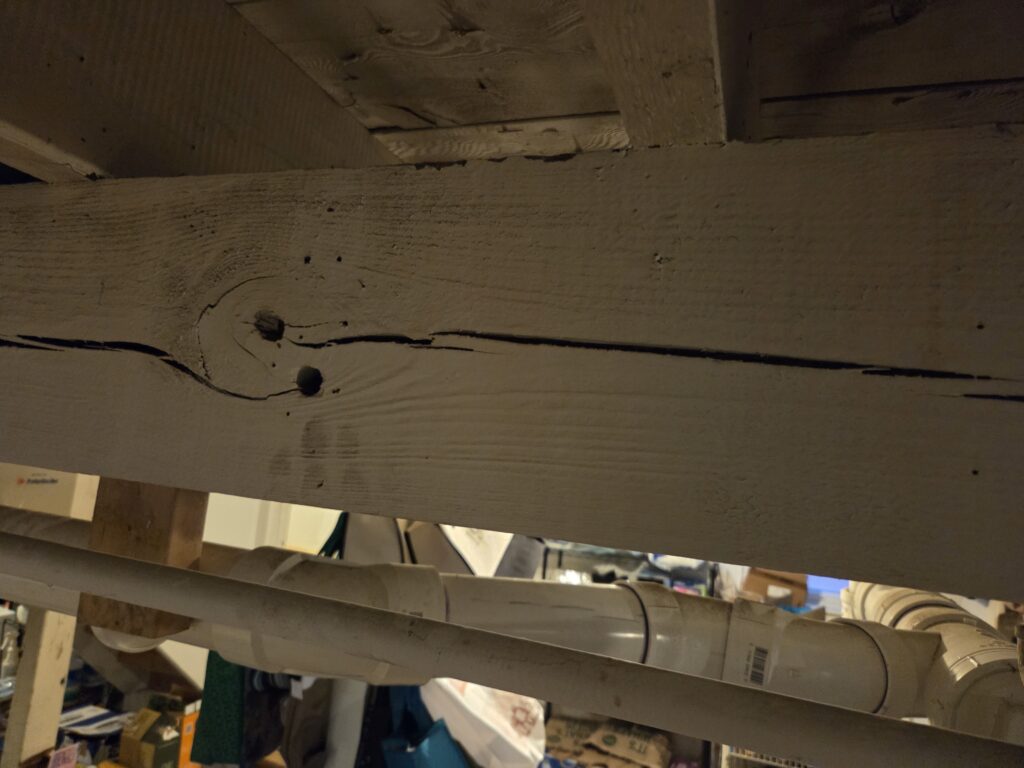
Water exposure and insects can damage structural wood over time. If the area around a crack feels soft or appears decayed, the concern may be deterioration rather than checking. Any active moisture or pest problem also needs to be addressed so the damage does not continue.
A Real Example of Structural Wood Damage
During a project in Cicero, Illinois, American Beam & Steel identified rotted wooden support columns and deteriorated structural supports in a century-old home. As documented in the team’s ABS In The Field: Post & Beam Replacement video, the project involved installing new concrete footings, steel beams, and steel support columns.
The project illustrates why visible deterioration around a beam’s supports deserves professional attention, even though ordinary wood checking may not require repair.
At a Glance: Normal Checking vs. Signs of Possible Damage
|
What you notice |
What it may mean |
|---|---|
|
Lengthwise crack with firm surrounding wood; no visible movement |
May be normal seasoning or checking. |
|
Deep split or significant separation through the beam |
May require structural evaluation. |
|
Cracking together with sagging or widening gaps |
Possible movement or support problem. |
|
Crushing or separation near a beam support |
Possible issue with the connection or bearing area. |
|
Soft, rotting, or insect-damaged wood |
Material deterioration needs investigation. |
These observations are a starting point, not a way to certify that a load-bearing beam is safe.
Does a Cracked Wood Beam Always Need Repair or Replacement?
No. A beam showing ordinary seasoning checks may not need repair at all. When damage affects the beam or its supports, the appropriate solution depends on the material, extent of deterioration, connections, and structural loads.
Some problems can be addressed through reinforcement or localized work; other conditions may call for replacing a damaged member. Those decisions should follow a proper assessment, not just the appearance of a crack.
American Beam & Steel provides structural repair services for existing homes and light commercial properties throughout Chicagoland, including repairs involving beams, joists, posts, columns, and related supports.
What Should You Do If You Find a Cracked Beam in Your Basement?
Start with what you can safely observe. You do not need to diagnose the crack yourself, and you should not attempt to modify a load-bearing beam without understanding what it supports.
Look for Changes in the Surrounding Structure
If it is safe to enter the area, take clear photos of the crack and the nearby posts, columns, floor joists, and connections. Check whether the surrounding wood appears damp or deteriorated, and whether the floors above show noticeable movement.
Older photographs can sometimes help you see whether the crack or surrounding conditions have changed. Avoid filling or concealing the crack before its significance is understood; a cosmetic patch does not repair structural damage.
Know When to Request a Structural Assessment
Noticeable sagging, deep splitting, failing supports, or deterioration are good reasons to bring in a qualified professional. If you suspect an immediate structural failure or have observed sudden movement, keep clear of the area and seek urgent assistance.
As Mark Hopman, founder of American Beam & Steel, puts it when discussing structural deficiencies during home inspections:
“It’s very important to find a reputable, knowledgeable contractor that can assess the issues at hand.”
– Mark Hopman, Insights From The Field: ABS & The Real Estate Closing (approximately 1:24).
The goal is to identify what is actually happening and whether any structural work is necessary – not to assume that every visible crack means an expensive replacement.
Concerned About a Cracked Wood Beam in Your Home?
A lengthwise crack in a basement beam may simply be wood doing what wood naturally does as it seasons. But cracks accompanied by sagging, splitting, moisture damage, or changes at the supports deserve closer attention.
At American Beam & Steel, we want homeowners to understand what has been found before deciding on the next step. If you’re unsure about a cracked support beam in your Chicagoland property, book a structural assessment and talk with our team about your concerns.

